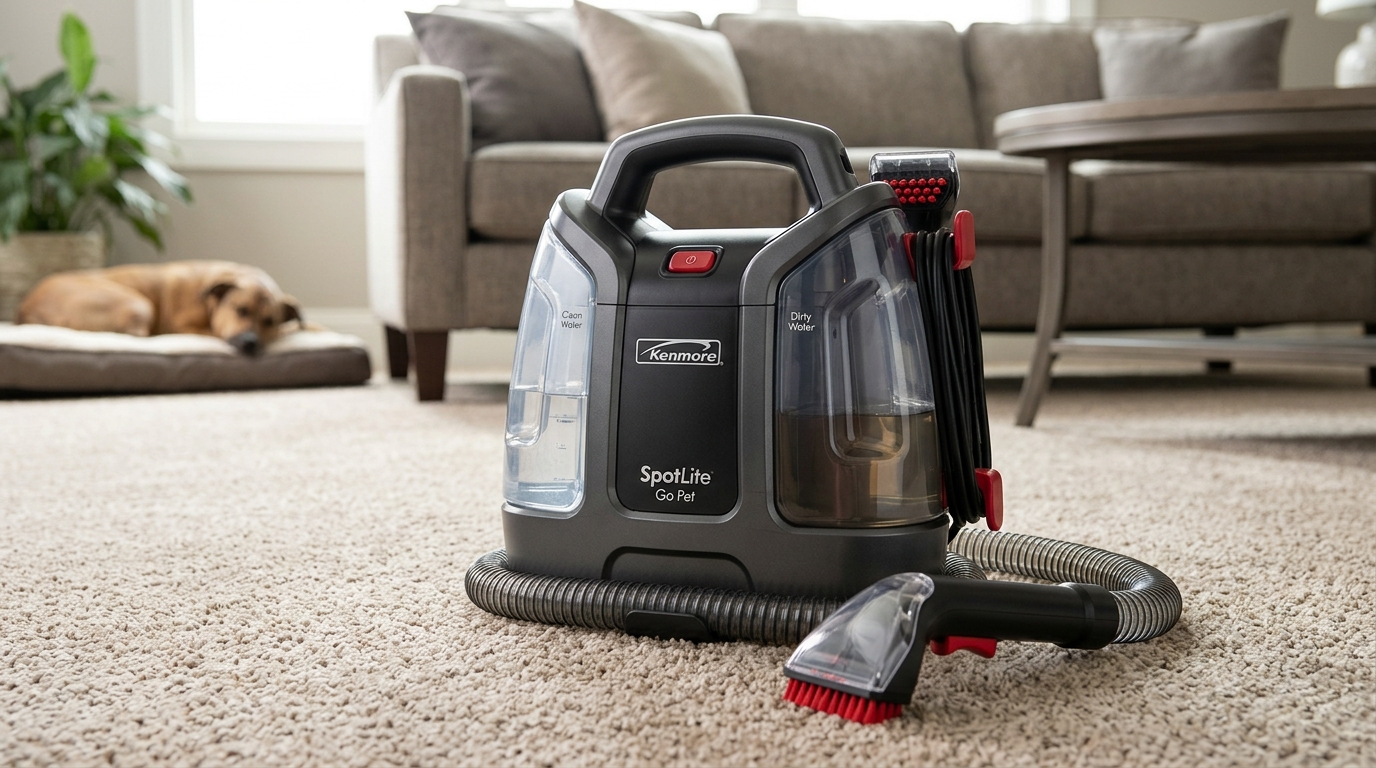
Kenmore SpotLite Go Pet Cleaner: What a Compact Portable Machine Can and Cannot Do
A Different Kind of Cleaning Tool
Pet owners know the moment well. A paw crosses the living room rug after a rainy walk, a water bowl gets knocked over near the couch, or a cat decides the upholstered armchair is a good place to shed. The mess is usually small, but it needs attention quickly, and a full-size carpet cleaner is more machine than the situation calls for. That gap is the space where compact portable cleaners have become popular.
The Kenmore SpotLite Go Pet is a portable carpet and upholstery cleaner marketed for pet owners who want to handle everyday accidents, tracked-in dirt, and pet hair on soft surfaces. This article looks at the general design of machines in this category, the situations they are commonly used for, the households that tend to benefit most, and the points worth reviewing before you decide whether one suits your home. It is written to help you understand the product type and interpret the listing, not to persuade you to buy.
How Compact Pet Cleaners Are Typically Built
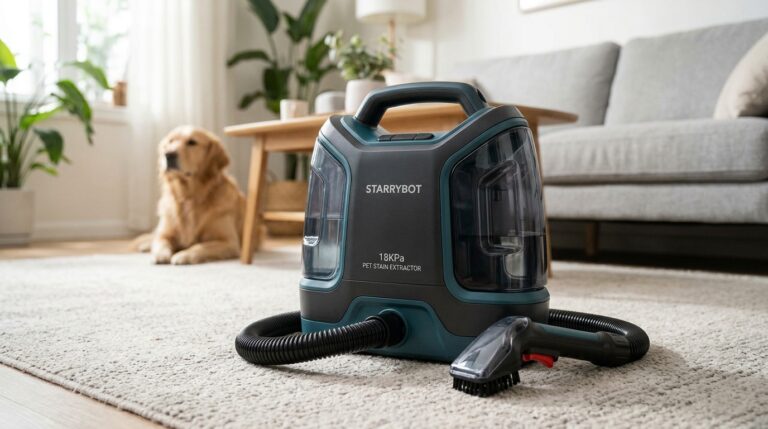
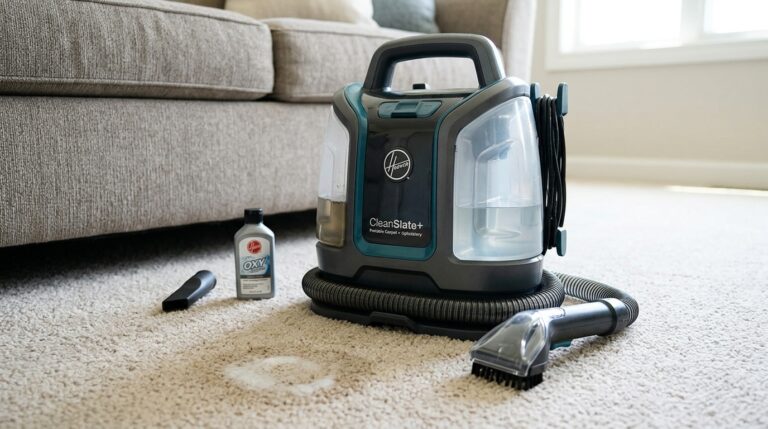
Portable spot cleaners share a fairly consistent layout. A reservoir holds clean solution, a second tank collects the used liquid and debris, a pump or motor produces suction, and a nozzle or cleaning head delivers solution and pulls it back up. Many units include a brush roll or agitator that loosens dirt from the fibers before extraction takes place.
The main advantage of this design is that everything fits in a single unit that can be carried from room to room. There is usually no need to move furniture or set up hoses across a hallway. A machine like this can sit on a shelf in a utility closet and come out only when needed.
The trade-off is capacity. Tanks are smaller than those on room-sized machines, which means more refills when you work through a larger area. The motor is also designed for shorter sessions, so most owners treat these machines as targeted tools rather than replacements for a full carpet cleaner. Understanding that balance is the starting point for judging any product in this category.
Pet-Focused Features to Look For
The “Pet” designation in a product name usually signals that the machine includes tools or features aimed at animal-related messes and fur. Common examples include a brush head designed to lift hair from carpet pile, a narrow upholstery nozzle for cushion seams, and sometimes a formula or accessory intended for odor-related cleaning.
When reviewing a listing, it helps to ask what each pet-oriented attachment is meant to do. A nozzle for upholstery and furniture may be better suited to sofa seams and chair cushions than to a wide rug. A brush head may help loosen embedded hair, but it works best when the fur is first gathered with a rubber broom or lint roller. Attachments are most useful when matched to the specific job.
Odor is a particularly important topic for pet owners. Cleaners can remove the surface residue that causes smells, but urine and other organic material can soak into carpet backing, padding, or subfloor. A portable unit can address what it reaches, yet persistent smells sometimes need additional steps, such as treating the padding or using a formula designed for organic stains. Setting that expectation early avoids disappointment.
Typical Situations Where the Machine Gets Used
Accidents are the most common reason people reach for a compact pet cleaner. Whether the spot is on a rug, a dog bed, or a seat cushion, the sooner it is treated, the easier it tends to be. Blotting excess liquid with a clean towel before running the machine helps reduce the amount of moisture that needs to be extracted and lowers the risk of the stain spreading.
Muddy paws and wet fur create a different kind of mess. Dirt that tracks onto entryway rugs, stair runners, or the lower part of a sofa can be worked out with a targeted pass. Because the dirt often sits in the base of the carpet pile, a brush-assisted cleaning head is typically more effective than a simple wipe.
Pet hair is a constant companion in many households. Upholstery is one of the harder surfaces, since hair clings to fabric fibers and can embed in seams. A pet tool and a gentle brushing motion can help lift it, though the results depend on the fabric, the amount of hair, and whether loose fur has been removed first.
Vehicles are another place where compact machines prove handy. Dog owners in particular often deal with hair and dirt on car seats and floor mats. Portable units can be used in the car if the power source and cord length allow, and they reduce the need for a separate trip to a car wash for interior care. Check the solution and the seat material before starting, since some car fabrics and leathers should not be treated with moisture.
Who Tends to Benefit From a Machine Like This
Households with one or more pets are the most obvious audience. Owners who notice fur on cushions, dirt on rugs, or occasional accidents may find that a portable cleaner fits their routine better than occasional professional visits.
Families with young children also make frequent use of these machines. Snacks, crayons, and spilled drinks are as common as pet messes, and a unit that lives in a closet and handles quick cleanups can be a practical addition.
Renters are often attracted to compact equipment because it does not require installation or significant storage space. Apartment living can make larger cleaning equipment impractical, so a portable tool that fits under a bed or behind a door has obvious appeal.
Some homes, however, have different needs. A house with mostly hard flooring, minimal soft furniture, or very large carpeted areas may find that a full-size machine saves time. People who prefer to schedule thorough deep cleaning across the whole home, rather than respond to individual spots, may want more capacity than a portable unit provides. And anyone uncomfortable with the physical effort of working through several spots in a session may prefer a different approach.
Things Worth Reviewing Before You Decide
Consider the Size of Your Typical Mess
Think about how often you deal with spills and how large the affected areas usually are. Spot cleaners excel at small, concentrated areas. If your messes tend to cover large sections of floor, you may spend more time refilling and passing over the same ground.
Check the Tank Capacity and Refill Process
Look at the volume of both the clean and recovery tanks, and consider how easy they are to remove, empty, and rinse. Tanks that are awkward to handle tend to be neglected, and neglected tanks can develop odors that defeat the purpose of cleaning.
Confirm the Solution Compatibility
Machines of this type are often designed around a specific formula or a class of approved cleaners. Using an unapproved product may leave residue, reduce suction, or affect the warranty. Review the manual for approved solutions and dilution guidance before buying a bottle.
Test on an Inconspicuous Spot
Carpets and upholstery vary widely. Some dyes bleed, some backings are sensitive to moisture, and some fabrics shrink or stiffen. A small test area, ideally in a hidden corner or under furniture, reveals how the material reacts before you treat a visible stain.
Plan for Drying Time
Every cleaning session adds moisture to the surface. Drying can take anywhere from a short while on thin synthetic fabric to many hours on thick carpet with padding. Good airflow, an open window, or a fan can speed the process. Keep pets away from freshly treated areas until they are completely dry, since residue and damp fibers can attract dirt.
Keep the Machine Clean
Regular maintenance keeps the machine performing as intended. Empty and rinse the recovery tank after each use, check the brush head for trapped hair, clear the nozzle of debris, and allow components to dry before storing the unit. A machine that is left damp can develop mildew smells.
Set Expectations for Stubborn Marks
Fresh stains usually respond well to prompt, careful treatment. Older stains, heavy residue, and marks that have chemically bonded to fibers may not lift entirely. Some discoloration is permanent. Working gradually, with repeated light passes, tends to produce better results than a single aggressive attempt.
How Compact Machines Compare to Other Options
Several tools can handle pet messes, and each has a different role.
Vacuums are essential for daily maintenance. They remove dry debris, dander, and loose hair efficiently, but they do not extract liquid or deep-set residue. Many pet owners vacuum frequently and rely on a separate tool for wet accidents.
Stain removers in spray or foam form are inexpensive and effective on certain marks. They require manual blotting and scrubbing, and they can leave sticky residue if not rinsed thoroughly. They work well as a first response on small stains.
Full-size carpet cleaners offer deeper cleaning across large areas. They have bigger tanks and more powerful motors, but they are heavier, take up more storage space, and usually require more setup time.
Professional services provide thorough cleaning, particularly for heavily soiled carpets or persistent odors. They are useful periodically but represent an ongoing cost and require scheduling.
A compact pet cleaner sits between a stain remover and a full-size machine. It provides more extraction power than a towel or spray, yet it stays small enough to be used spontaneously. The main limitation is area coverage. Choosing among these options comes down to how often accidents occur, how large your carpeted areas are, and how much time you want to invest in each cleaning session.
Frequently Asked Questions
Is this machine suitable for pet urine?
A portable cleaner can extract liquid and residue from the surface, which helps reduce the source of odor. Urine can penetrate padding and subfloors, though, so some odors may persist. For best results, blot as much liquid as possible first, clean thoroughly, and consider a treatment designed for organic stains if the smell remains.
Can I use it on car seats?
Many owners use portable cleaners on vehicle upholstery, but suitability depends on the material. Check the seat’s care guidance, confirm that the attachments and solution are appropriate, and test on a hidden area. Leather and some synthetic materials may require different handling.
How do I remove pet hair before cleaning?
Loosen and gather hair first with a rubber broom, lint roller, or damp rubber glove. Then vacuum the area. Pre-removing hair allows the cleaner’s brush head to work on residue and embedded dirt rather than clogging with fur.
Will the machine damage delicate fabrics?
Some materials, such as silk, certain wool blends, and vintage textiles, can be sensitive to moisture and agitation. Always check the care label, use the gentlest setting if available, and test before treating visible areas. When in doubt, consult a professional cleaner.
How often should I clean the tanks?
Empty and rinse the recovery tank after each session. Clean the clean-water tank periodically, following the manual, to prevent buildup. Allowing residue to sit can cause odor and affect performance.
Does it work on stairs?
Many portable cleaners can be used on stairs because they are lightweight and easy to carry. Be careful with cords and balance, and work from the top down so that solution does not run onto untreated steps.
Why does the area feel damp after cleaning?
Some moisture is normal after extraction. Carpets and padding can take a while to dry fully. Adding airflow, avoiding excessive solution, and extracting thoroughly can shorten drying time.
Final Thoughts
The Kenmore SpotLite Go Pet is part of a practical category of compact machines built for the mess that pets and busy households create. Its value depends on the surfaces you clean, the frequency of accidents and hair buildup, the size of your carpeted areas, and your willingness to work through spots carefully. Testing on hidden areas, using approved solutions, allowing proper drying, and maintaining the tanks and nozzle will help you judge whether it fits your routine.