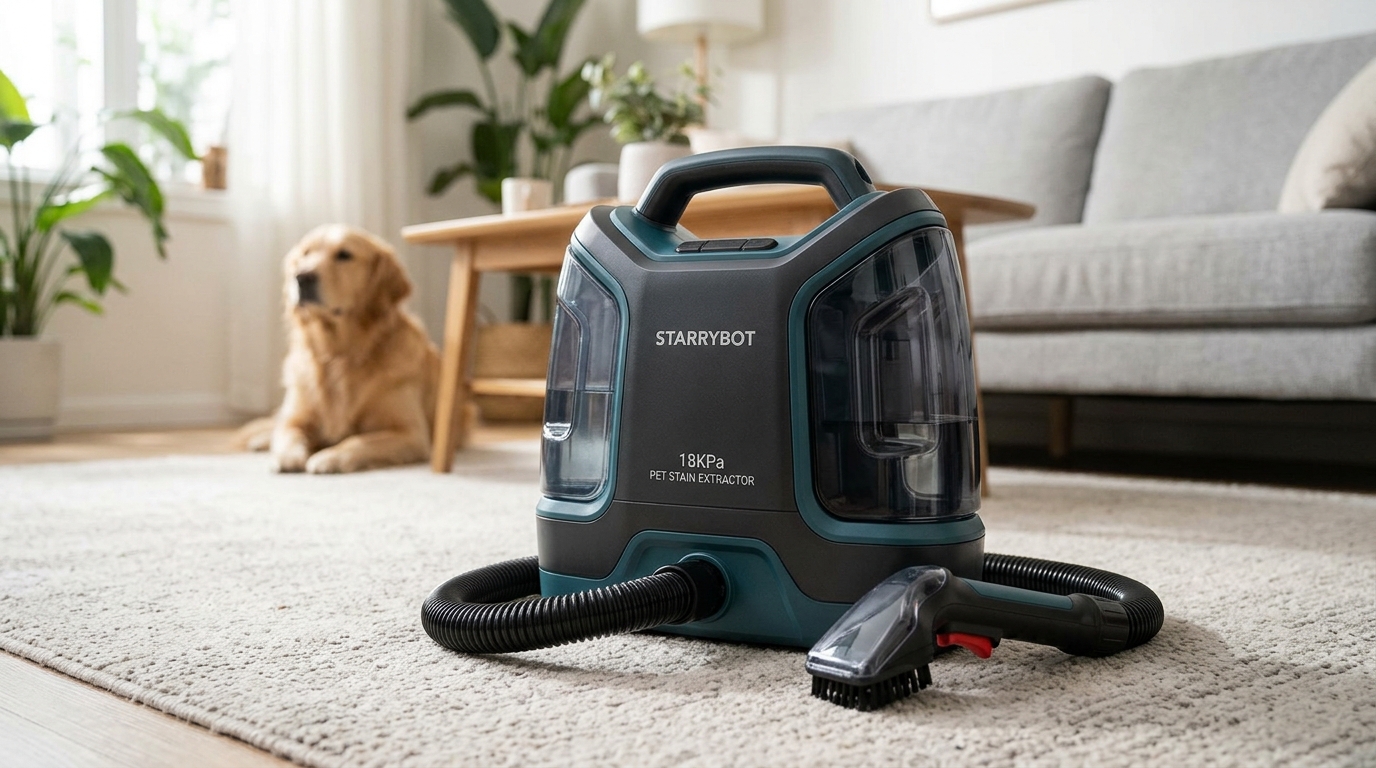
Starrybot 18Kpa Upholstery Cleaner: Notes on Suction, Pet Stains, and Fabric Care
Upholstery has a way of collecting the evidence of ordinary life. A cushion picks up crumbs, a chair arm takes on a faint coffee ring, and a dog’s favorite spot on the sofa slowly fills with fine hair. Most of these issues are small, but they build up, and they tend to be more stubborn on fabric than on hard flooring. That is why many households look for a dedicated upholstery cleaner rather than relying on a vacuum alone.
The Starrybot upholstery cleaner is offered as a machine for pet stains and fabric surfaces, and its listing highlights a suction rating of 18Kpa. This article explains what that kind of rating generally means, how machines in this category are typically used, which situations they suit, and what to check before deciding whether one fits your home. The aim is to help you read the specifications with some context, rather than to encourage a particular purchase.
What a Suction Rating Tells You
Suction is usually expressed in kilopascals (kPa) or a similar pressure unit, and it describes how strongly the machine pulls air and liquid through its nozzle and hose. In general terms, higher suction can help lift moisture and loosened debris from fabric, but the number alone does not describe the full cleaning performance. Brush design, solution formulation, airflow, and the condition of the filters all affect the outcome.
It is also worth noting that manufacturers do not always measure suction in the same way. A figure printed in one listing may not be directly comparable with a figure printed in another. The most useful approach is to treat the rating as one signal among several and to look at the machine’s tank capacity, attachments, and maintenance requirements alongside it.
For upholstery in particular, extraction matters because fabric holds moisture for longer than most floor surfaces. A machine that removes more liquid can shorten drying time and reduce the chance of water marks forming in cushions and seams. That benefit only applies when the fabric and filling are suitable for the moisture involved.
Where Pet Stains Fit Into the Picture
Pet owners often search for upholstery cleaners because of stains that are both visible and odorous. Fresh accidents, muddy paw prints, and saliva marks can all leave residue in fabric. The challenge is that organic material can travel into the padding beneath the surface, and a stain that looks gone may still produce an odor.
A machine designed for pet stains typically uses a nozzle and brush that work the solution into the fabric, followed by suction that pulls the mixture back out. This process can lift the surface residue that attracts pets back to the same spot, which is one reason prompt cleaning is commonly recommended. The solution matters just as much as the machine, so it is wise to use a formula that the manufacturer lists as compatible.
Odor needs realistic expectations. Cleaning can address the material that is accessible, but a deep-set smell in foam or a subfloor may return if the source is not fully treated. Some owners find that airing out the room, rinsing the area with a clean water pass, and allowing extended drying helps, while others need professional treatment for severe cases.
Common Ways Upholstery Machines Are Used
The most frequent use is treating sofa and armchair cushions. Because the cushions can be removed or accessed from several angles, a handheld or compact machine can reach the fabric surface and seams without moving furniture.
Dining chairs are another practical application. Their fabric seats collect crumbs, spills, and pet hair, and they are often hard to clean with a standard floor tool. An upholstery nozzle with a narrow head can work along the edges of a chair seat and around stitching.
Many households also use these machines on car interiors, mattress edges, and stair treads. The suitability of each surface depends on the material and the presence of any electrical components or padded backing that should stay dry. Checking the care label and the manufacturer’s guidance before starting is always a good step.
Pet beds and removable covers are often a separate task. Where a cover can be taken off and machine-washed, that may be a better option than extraction. For fixed upholstery, a targeted pass with the machine can work well on the parts of the bed that cannot be removed.
Who This Type of Machine Tends to Suit
Households with dogs or cats are the clearest audience. Owners who notice repeated hair buildup, frequent small accidents, or dirt on fabric surfaces may find that an upholstery machine provides more control than a spray cleaner and a towel.
Families with children also benefit from having an easy way to handle sticky spills and crumbs that fall into sofa cushions. A compact machine can be stored in a closet and used when needed, which suits homes where major cleaning happens in short bursts rather than on a schedule.
Anyone who owns delicate or specialty fabrics should approach the decision carefully. Some materials, such as silk, certain leathers, and vintage textiles, can be damaged by moisture or agitation. In those cases, professional cleaning or a fabric-specific product may be more appropriate.
Practical Factors to Review
Check the included attachments. An upholstery nozzle, a crevice tool, and a brush head each serve a different purpose. Confirm that the set in the listing covers the surfaces you clean most often.
Look at tank size and refill routine. A larger clean-water tank allows more work before refilling, while a smaller one is lighter and easier to store. Consider how easily you can remove, empty, and rinse both tanks.
Confirm solution compatibility. Upholstery machines often perform best with a specific formula. Unapproved solutions can leave residue, affect suction, or conflict with the warranty. Read the manual before buying a bottle.
Test before treating visible areas. Fabrics vary in colorfastness, backing, and sensitivity to moisture. A hidden spot, such as the underside of a cushion or the back of a chair, shows how the material responds.
Plan for drying. Upholstery can stay damp longer than carpet, especially in thick cushions. Good airflow, open windows, and fans can help. Keep pets off freshly cleaned fabric until it is fully dry.
Maintain the machine. Rinse the recovery tank after each use, clear the nozzle, check filters, and let parts dry before storage. A damp machine left in a closet can develop smells that transfer to the next job.
Set expectations for stains. Fresh marks often respond well to prompt treatment. Older stains, heavy residue, and dye transfer may remain partly visible. Working gradually with several passes usually produces better results than one strong attempt.
Comparing Upholstery Machines With Other Options
Each approach to fabric cleaning serves a different need.
Vacuums with upholstery tools are ideal for dry debris, dust, and pet hair. They do not extract liquid or lift residue from deep within fabric, so they work best as a routine step rather than a complete solution for stains.
Spray cleaners and foams can treat small marks quickly, and they are inexpensive. They require blotting and rubbing, and they can leave a sticky film if not rinsed. They are useful for minor spots but less effective for widespread areas.
Steam cleaners sanitize with heat and moisture, which suits some fabrics and surfaces. They do not always extract residue as thoroughly as a dedicated extraction machine, and they may not be suitable for every material.
Professional upholstery cleaning delivers thorough results on valuable or heavily soiled pieces. It involves scheduling and cost, but it can be the right choice for large or delicate items.
A dedicated upholstery machine sits between these options. It offers more extraction than spray cleaners, more control than a steam unit for many households, and more convenience than hiring a service for every spill. Its usefulness depends on how often you clean upholstery, what fabrics you have, and how much time you want to spend on setup, drying, and maintenance.
Frequently Asked Questions
Does an 18Kpa rating mean it cleans better than other machines?
Not necessarily. Suction is one factor in performance. Brush design, solution, tank capacity, and how the machine is used all affect results, and ratings are not always measured the same way across brands.
Can it remove pet urine odor completely?
It can remove surface residue and some of the material that causes odor, but urine that has soaked into foam or a subfloor may need additional treatment. If odor persists after cleaning and drying, consider consulting a professional.
Is it safe for all upholstery fabrics?
Not every fabric responds well to moisture or agitation. Check the care label, follow the manufacturer’s guidance, and test on a hidden area before cleaning a visible section.
How long does upholstery take to dry?
Drying time depends on the fabric thickness, the amount of liquid used, the humidity, and airflow. Thick cushions may need many hours. Fans and open windows can help.
Do I need to remove pet hair first?
Removing loose hair with a rubber broom, lint roller, or vacuum before cleaning helps the brush and nozzle work on residue rather than clogging with fur.
What should I do after cleaning?
Allow the fabric to dry fully, keep pets away until then, empty and rinse the recovery tank, and clean the nozzle and filters so the machine is ready for next time.
Final Thoughts
The Starrybot upholstery cleaner belongs to a practical category of machines designed for fabric stains, pet messes, and everyday buildup on sofas, chairs, and other soft surfaces. Its value depends on the suction and performance you need, the fabrics you clean, the frequency of spills, and how much maintenance you are willing to handle. Reviewing the attachments, confirming solution compatibility, testing on hidden areas, and allowing proper drying will help you judge whether it suits your home.